


17.08.2026 |
ChatGPT knows your company. Do you like what it has to say?
Rather than securing that top ranking on Google, the focus for businesses today is about the answers people get from AI assistants. The good news is that companies can influence what ChatGPT and other tools say about them.
The rules of the web are undergoing a fundamental shift for businesses everywhere. For years, Google was our gateway to websites. Now, though, we’re using it less and less when seeking out recommendations. Instead, we ask an AI assistant such as ChatGPT, Claude or Perplexity.
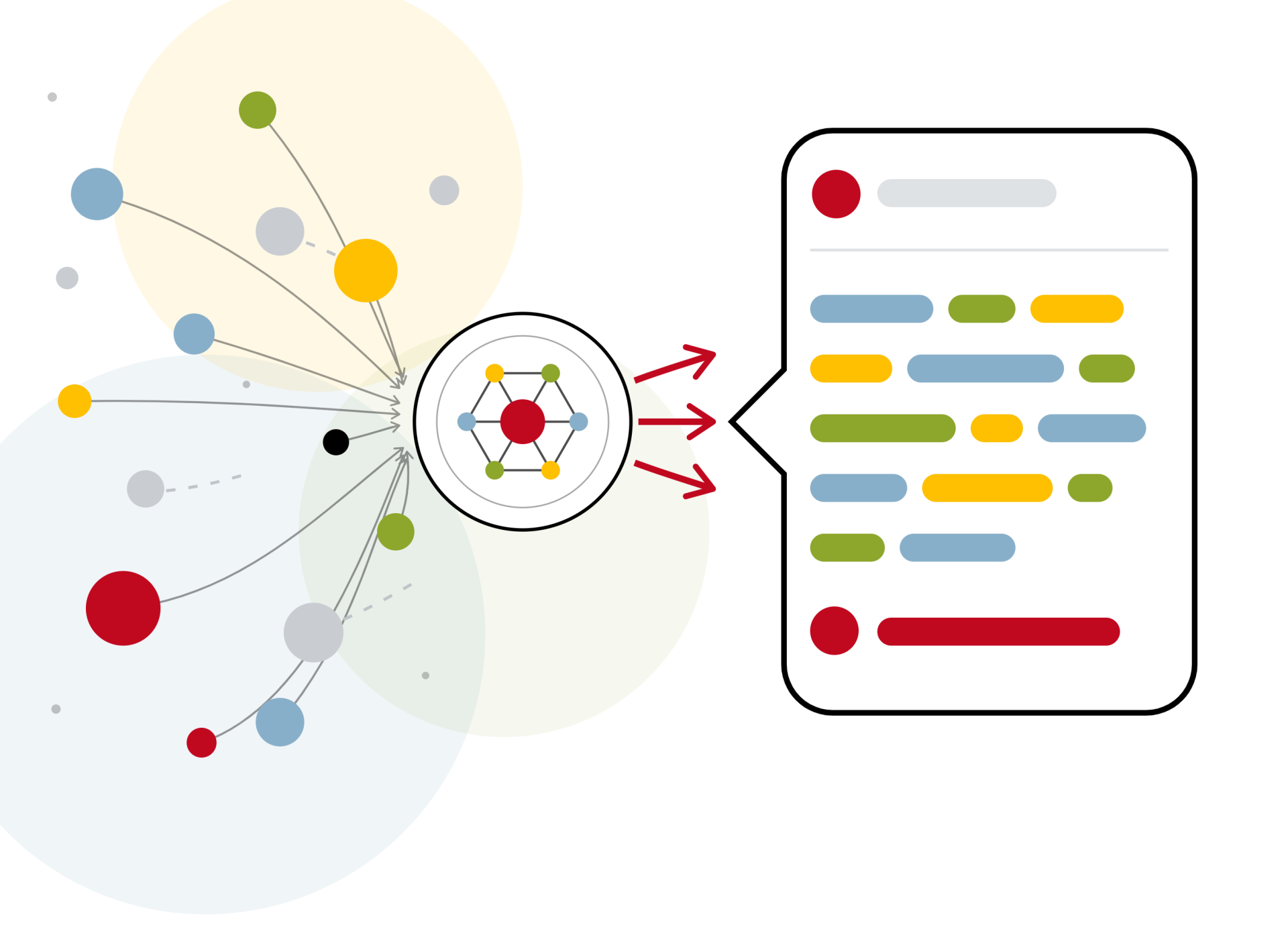
And instead of getting back a list of hundreds of links, we receive an answer – often with a clear recommendation. AI assistants don’t simply summarise information. Based on so-called large language models (LLMs), they build narratives about companies. They assess and weigh information and determine which brands appear in their answers at all
The result: if your company is absent from those answers, it is effectively invisible to many users. This is also changing the way companies communicate. The most important question is no longer: “How do I get as many people as possible to visit my website?” It is: “How do I become part of the answer?”
Reputation beats reach
Marketing departments continue to invest significantly in advertising and search engine optimisation. Both remain important, but it is no longer enough on their own.
A company can use its website to claim that it is a market leader. A campaign can repeat that message a thousand times. But to an AI tool, it remains just that: a claim made by the company. Trust only develops when independent sources are able to support that claim.
This is why AI systems compare information from different sources. They assess whether trade publications, industry platforms, studies, experts and customer reviews paint a similar picture. Credibility grows where such sources align. If a company’s own voice is the only one speaking, the claim has no support.
This is why reputation is becoming more important relative to reach alone. Or, put simply: Attention can be bought. Trust cannot.
SEO remains important, but its role is changing
A company’s website still serves as its digital home, listing its products, services, areas of expertise and positioning. Structured data, a clear information architecture, fast loading times and well-structured content help search engines and language models alike to interpret information correctly.
Even so, this is no longer enough today. ChatGPT doesn’t just consider what a company says on its own website. It also asks: “Are other trustworthy sources saying the same thing?” Only when a consistent picture emerges across multiple sources does a company become more likely to appear in AI-generated answers.
Communication and marketing are converging
For communications teams, this presents a major opportunity. While marketing has traditionally focused primarily on visibility and communications on building reputation, these two worlds are increasingly converging.
Companies that regularly feature in trade media and are recognised as experts not only improve their reputation, but also increase their visibility in AI searches. Traditional media relations therefore serve two purposes today: They persuade people and shape what AI systems know about a company. This turns reputation into a real competitive advantage.
AI optimisation doesn’t have to be complicated
To make your company visible in an AI search, you don’t need to understand the technology behind ChatGPT. What matters is understanding how the leading LLMs currently perceive and present your brand.
Many companies assume they need to begin by overhauling their entire website. In most cases, however, this is the wrong starting point. The first step is much simpler. Here’s what you need to know:
What questions do potential customers ask in their AI search?
Does your company appear in the answers?
What sources does ChatGPT use?
What topics does AI associate with your company?
What narratives are AI assistants constructing about your company?
Once you have these answers, you also know where investment can make a real difference.
Turning data into action
Analytics tools may produce impressive, but colourful charts don’t change reputations. What matters is turning those insights into action: Which topics should be associated more strongly with the company? Which trade publications are relevant here? What content is missing from the website – a white paper, expert articles, customer reviews, etc.? And which statements about the company should be reinforced more frequently by other sources in the future?
This is where the real value of AI analysis lies: not in measuring, but in knowing what you need to do first come Monday morning.
Do you know what ChatGPT is saying about you?
We make this blind spot visible. Together with our partner agency cuemarc, open up analyses how LLMs talk about your brand: which sources shape the answers, which topics they associate with your company, how visible you are compared to your competitors – and where you’re not appearing in the answers at all.
More importantly, we show you what it takes to make your company part of the answer in future, rather than just one of many search results: specific recommendations for communication, marketing and management without technical jargon.
After all, trust is rarely built if brands simply praise themselves – it comes from others talking about them. And this is precisely where open up comes in: Earned media – credible third-party coverage that carries particular weight with AI systems.
Take the test
We analyse what ChatGPT is saying about your company today – and show you what you can do to change it. Get in touch for a no-obligation initial consultation.

About the author
Editorial coverage cannot be bought. This is precisely why AI systems lend it so much weight. Philippe Welti helps companies earn it.